







A Practical Guide to Cyanotype and SolarFast on Fabric
Cyanotype is one of the oldest and most enchanting light-sensitive printing processes. With just a few materials and the power of the sun, you can capture silhouettes, textures, and shapes directly onto fabric, creating that iconic deep Prussian Blue. This post will show you not only how to do it — but also why each step matters.
✨ Preparing the Fabric — The Foundation of a Good Print
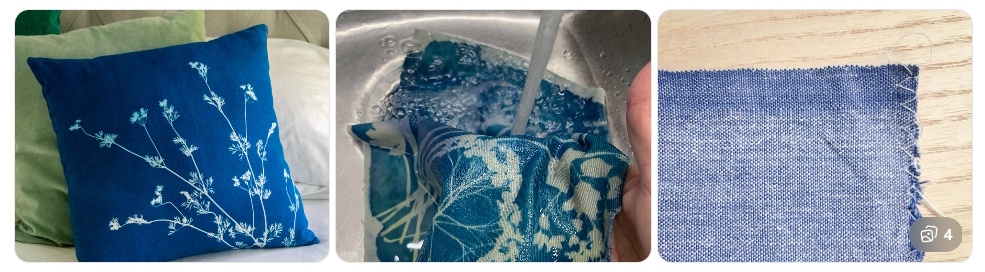
Cyanotype doesn’t dye fibers from the inside — it sits on the surface. If the fabric still has oils, softeners, or resin from the factory, the light-sensitive coating won’t stick properly.
- Pre-wash the fabric with a mild, phosphate-free detergent.
- Avoid fabric softeners and strong cleaners.
- Dry and iron thoroughly to remove moisture and wrinkles.
- Choose white or light-colored cotton or linen so the blue tones appear bright and clear.
🌞 The Photochemical Reaction — Painting with Light
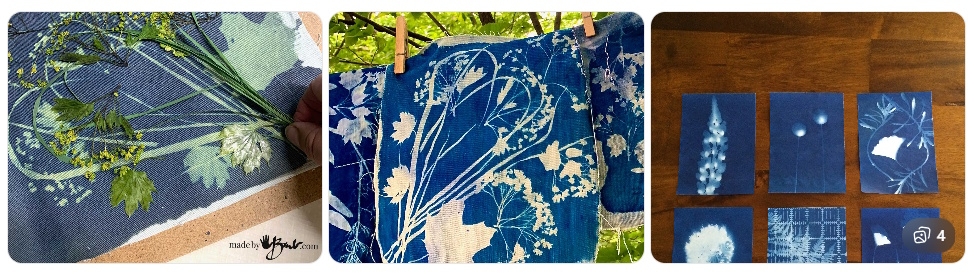
The magic of cyanotype lies in chemistry. The process uses Potassium Ferricyanide and Ammonium Ferric Citrate. When exposed to UV light, the iron (Fe³⁺) in the mix is reduced to Fe²⁺, which reacts to form Prussian Blue.
- Brush or roll the coating onto your fabric evenly.
- Let it dry in complete darkness.
- Arrange objects, plants, or negatives on top.
- Expose under sunlight or UV light until the color shifts from yellow-green to blue-grey.
- Rinse gently in cold water to remove the excess solution without disturbing the image.
- Allow to air-dry in the shade — the blue deepens as it oxidizes.
Tip: If the print looks dull or washed out, it was probably rinsed too soon; if it’s flat and grainy, it may have been overexposed. Cyanotype rewards patience and experimentation!
🧴 Washing & Care — Keeping the Color Alive
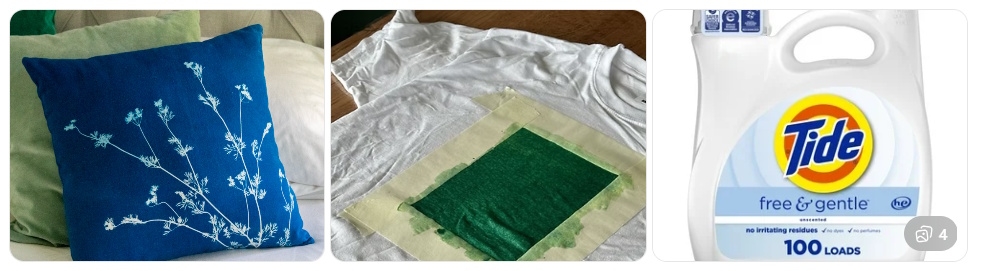
Prussian Blue is beautiful but delicate. It stays stable only in neutral or slightly acidic pH. Alkaline detergents (those containing phosphates, soda, or bleach) break the pigment’s molecular bonds and cause fading.
- Hand wash only, in cold water with a phosphate-free detergent.
- Do not soak — prolonged immersion can wash out the pigment.
- Air dry immediately after washing, avoiding dryers.
Phosphate-free detergents use enzymes, citrates, and biodegradable surfactants to clean without raising the pH. They’re gentle on both fabric and color.
🔒 Sealing the Print
To make your prints last longer, apply Jacquard #100 Textile Colorless Extender. This clear acrylic medium acts like a soft varnish, protecting the surface from water and oxidation.
You can heat-set it with an iron or heat press, or add a little Airfix to cure it chemically without heat.
☀️ From Cyanotype to SolarFast — The Next Step for Professional Results
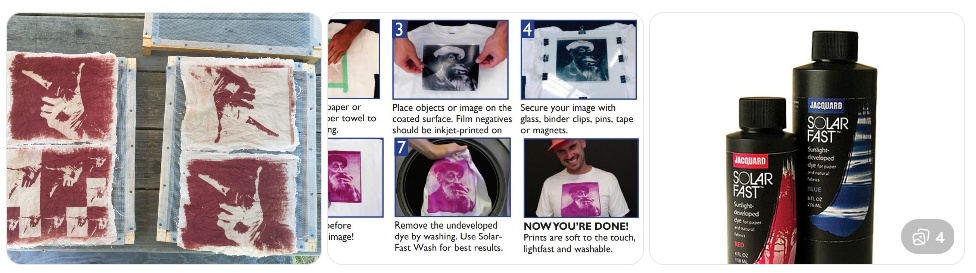
If you love the creative process of cyanotype but need more durability, it’s time to explore Jacquard SolarFast.
SolarFast uses a different chemistry — reactive dyes that form permanent covalent bonds with natural fibers. Instead of sitting on the surface, the color becomes part of the fabric itself.
- Fully washfast and lightfast — the image doesn’t fade.
- Ideal for t-shirts, tote bags, and textile artworks.
- Great for professional makers who want creative prints that last.
With SolarFast, you keep the magic of light but add the permanence of chemistry. It’s the natural next step for artists who want both expression and endurance.
💡 In Closing
Cyanotype is not just a printing process — it’s a dialogue between light, chemistry, and time. Understanding how it works lets you control your results and make your art last longer. And when you’re ready to take your work a step further, SolarFast offers a modern, durable way to keep painting with sunlight. 🌞💙


