





A Complete Guide for Beginners and Advanced Artists!
If you love art journaling or mixed media projects, you know that the right ink can elevate your work — or ruin it. Every type of ink has its own composition, performance, and best uses. In this article, we've gathered everything you need to know to choose the perfect inks for your needs, style, and materials.
Let’s get started!
1. Inks stamping & art journaling backgrounds
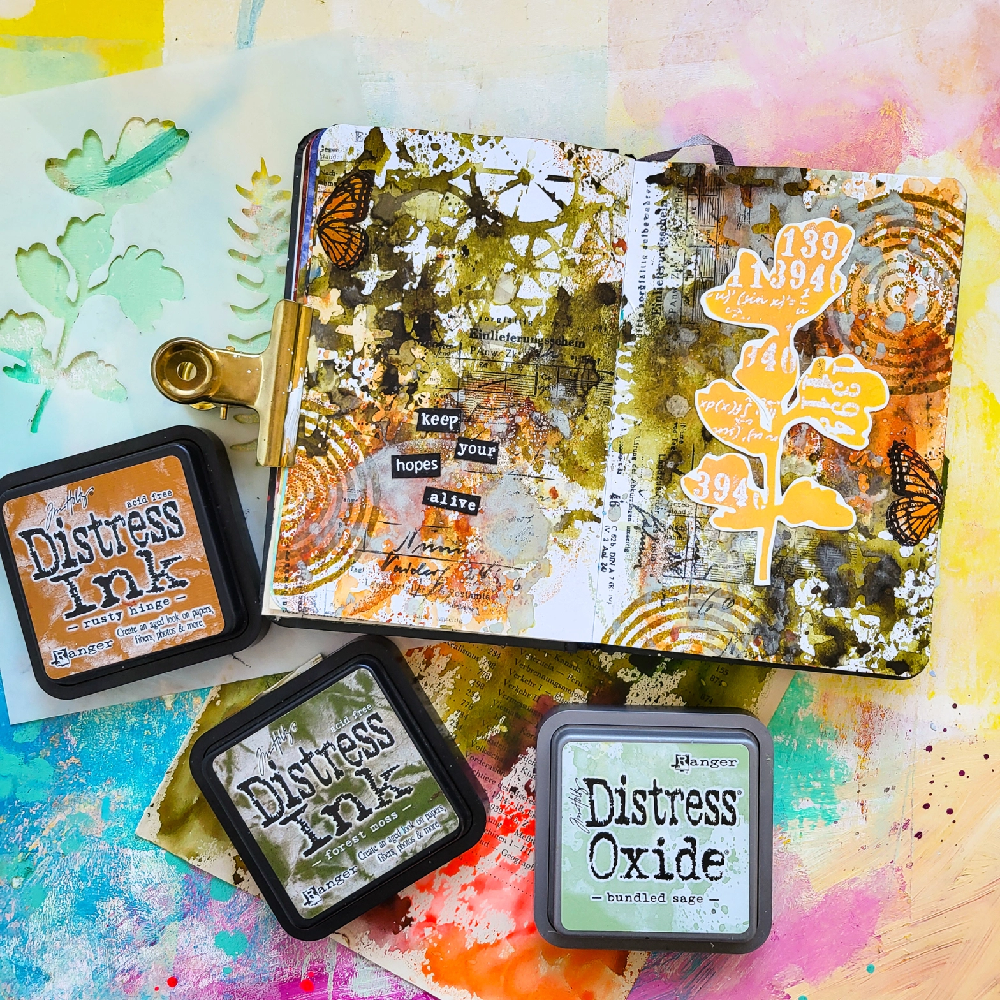
🖌️ Tim Holtz Distress Inks
Dye-based, water-based inks
Ideal for: backgrounds, blending, vintage effect, edge distressing
They are not permanent in water, smudge if wet.
👉 Check all the Distress Inks here
🖌️ Tim Holtz Distress Oxide Inks
A mixture of dye & pigment ink with oxidant action
Ideal for: opaque effects, layering, stamping with chalky finish, water techniques (water reactive)
Give a "milder" and opaque color compared to Distress inks.
👉 Check all the Distess Oxides Inks here
2. Inks for clear, detailed stamping
🖌️ Ranger Archival Ink
Oil-based permanent ink
Ideal for: non-smudge with water stamping, outlines before the use of watercolors or ή sprays
Dries quickly, ideal for art journaling & watercolor layouts.
👉Check all the Archival Inks here
🖌️ Tsukineko Versafine Clair
Pigment-based withn fine detail
Ideal for: detailed stamping, heat embossing
Dries quite quickly and produces a vivid, intense chromatic outcome.
👉Check all the Versafine Clair Inks here
🖌️ Pinkfresh Inks
Premium dye inks
Ideal for: clean and clear stamping and layered stamping (i.e. flowers with delicate shades)
They do not smudge easily and produce bright, clean colors.
👉 Check all the Pinkfresh Inks here
.jpg)
3. Inks for για embossing & special effects
🖌️ Tsukineko Versamark
Clear watermark ink (sticky)
Ideal for: heat embossing powders, resist techniques, achieving watermark effects.
👉 Check the Versamark Ink here
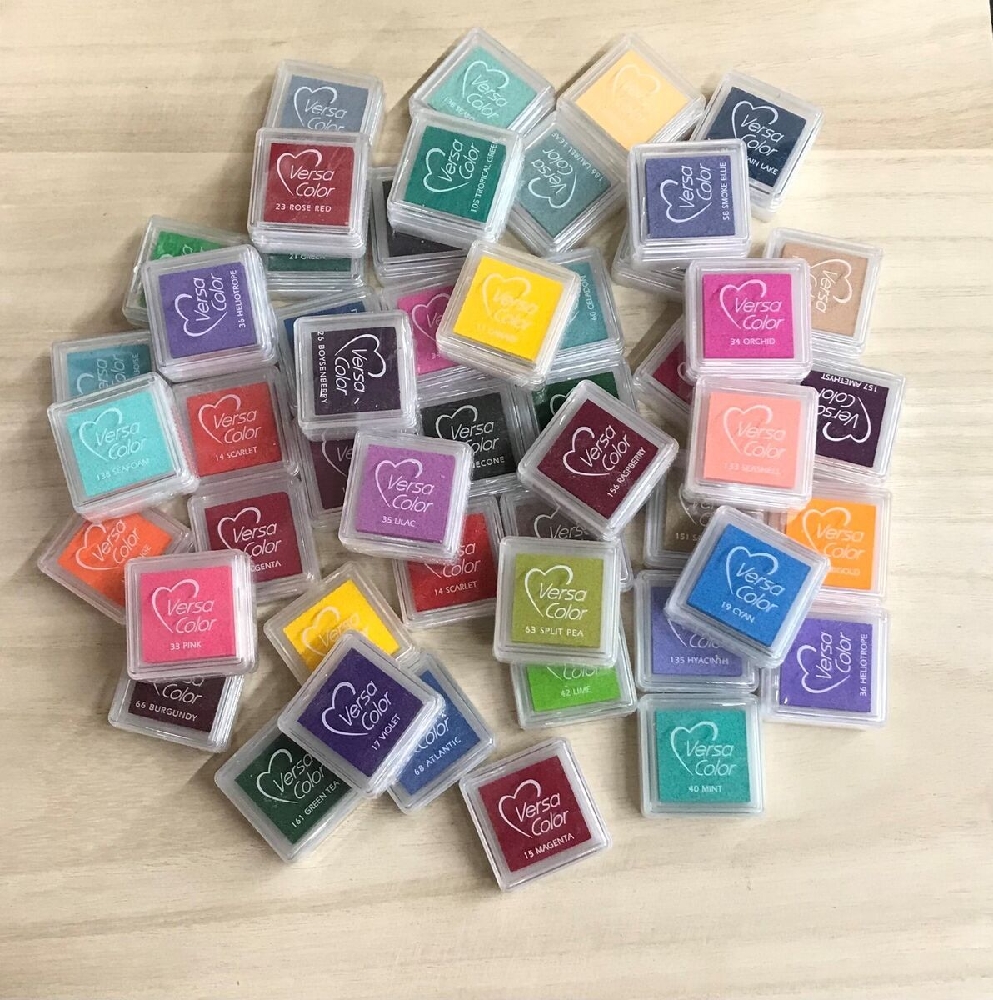
🖌️ Tsukineko Versacolor
Pigment-based ink
Ideal for: stamping, embossing, blending on dark surfaces, chalky effects
👉 Check all the Versacolor Inks here
4. Inks for non-porous surfaces & mixed media
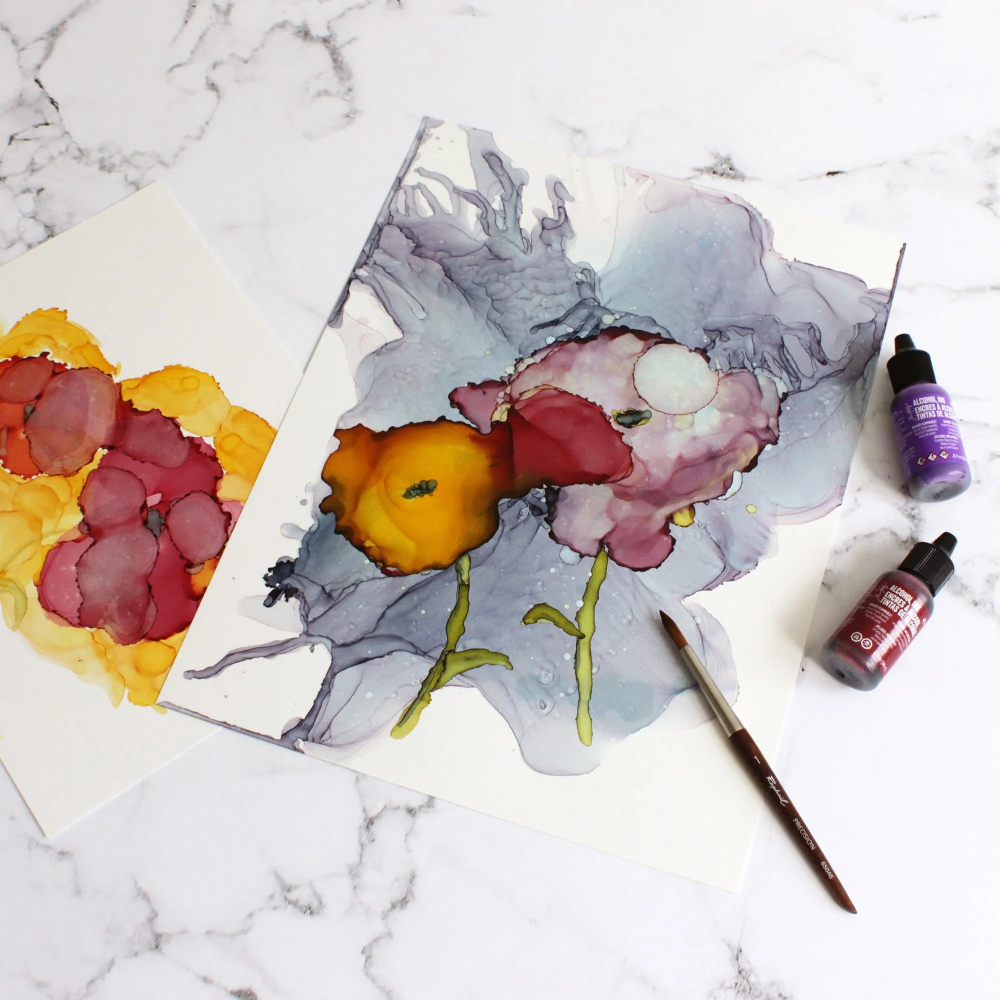
🖌️ Alcohol Inks
Alcohol-based inks
Ideal for: plastic, metal, acetate, yupo paper, achieving abstract backgrounds and dripping techniques
They use a special blending solution – no water.
👉 Check all the Alcohol Inks here
🖌️ Tsukineko StazOn
Permanent ink, Solvent-based
Ideal for: stamping on non-porous surfaces such as plastic, glass, metal, acetate.
Dries quickly and remains water and smudge resistant
👉 Check all the StazOn Inks here
🖌️ Metallic & Hybrid Inks
Metallic inks produce shimmering and pearlescent effects, ideal for card making and mixed media.
Hybrid inks combine dye & pigment properties and are ideal for stamping that dries quickly and has stability.
👉 Check all the metallic & hybrid inks here
So, which one is the optimum choice if you want...
✔️ quick and clear stamping → Archival, Versafine Clair, Pinkfresh
✔️ vintage, blending or water techniques → Distress or Distress Oxide
✔️ embossing → Versamark, Versacolor, Versafine Clair
✔️ to color on non-porous surfaces → Alcohol inks
💡 Tip: If you're not sure, start with Archival or Versafine Clair for stamping, and Distress for backgrounds. They are the most versatile bases for art journaling and scrapbooking.
.jpg)
To sum up: tips before you buy an ink...
Before selecting ink for your next project, take a moment to consider where and how you'll be using it. Here are some key points to keep in mind:
First, drying time is essential. If your project involves multiple layers or embossing, you might prefer inks that take longer to dry. Conversely, for journaling or everyday stamping, quick-drying inks are more convenient.
Next, ask yourself: Will I be adding water or other liquids over the ink? If yes, you'll need a waterproof or permanent ink to prevent smudging when you spray or paint over it.
Equally important is the surface you'll be working on. Some inks perform best on porous papers, while others are specifically designed for glass, plastic, metal, or acetate.
Finally, think about the technique you want to use: stamping, alcohol ink dripping, block printing, etc. You might need a thicker, more transparent, or specially formulated ink to achieve your desired effect.
In essence, the “right” ink isn’t about brand — it’s about what suits your needs. The more clearly you define your project’s goals, the easier it will be to choose the perfect ink.
If you have any questions, do not hesitate to contact us — via social media or email — and we’ll be happy to help!
What do you think of this overview? I hope it makes choosing your inks easier! By the way, do you have a favorite ink? Leave us a comment or share a photo of your creation on Instagram with the hashtag #scrapsnpiecesgr!
Enjoy your day and happy creating!
Until next time,
Artistic kisses





